Environmental damage after conflicts.

It is rare these days for conflicts to conclude cleanly with a peace agreement and a ceasefire. Low level conflict and insecurity can continue for long periods. In this respect many of the forms of harm that occur during conflicts are also applicable to this phase, particularly in its early stages.
Transitions to peace are typified by weak state control, this means that environmental governance, and the capacity to provide it is often absent. Attention to environmental issues in the face of many competing social and economic priorities is usually limited. These conditions are key to many post-conflict environmental problems. In some instances, peace and power sharing agreements have impeded governance by creating fragmented political systems.
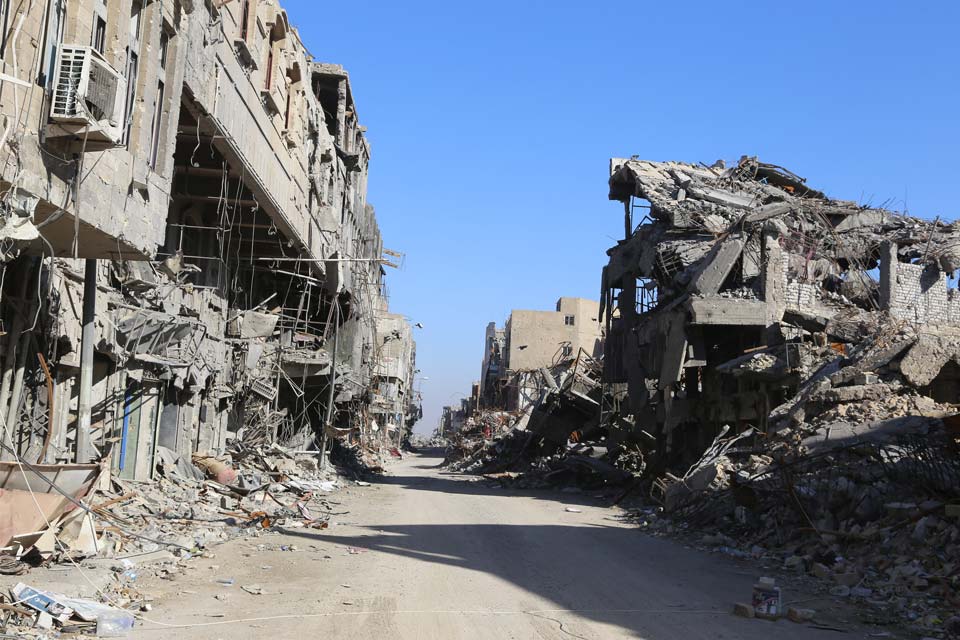
Debris and rubble in Mosul in 2018. The city was left with at least 8 million tonnes of rubble. Unless managed properly, the disposal of post-conflict rubble and debris can create new environmental problems. Credit Hassan Partow/UNEP
In the immediate aftermath of conflicts, states and international actors may be faced with immediate legacies, such as vast quantities of rubble and debris. If managed poorly, for example through informal dumping, disposal can create new environmental risks. There have been instances where the looting of industrial sites has exposed communities to pollutants, and many of the environmentally harmful coping strategies that people used to survive during conflicts may continue well beyond their end.
In conflicts with high levels of displacement, land rights and ownership issues are common, particularly when returnees move home. Influxes of people can increase environmental pressures in areas from which they have been absent, particularly through agricultural conversion or expansion. This can lead to increased rates of deforestation. Research has shown a sharp increase in deforestation rates in many post-conflict countries, with clearance outpacing the state’s ability to control it.
The presence of military forces can extend well into the post-conflict phase. The operation and ultimate closure or handover of bases are associated with pollution issues, particularly where the host nation may be unable to enforce environmental standards. The use of practices like burn pits has exposed military personnel and communities to hazardous pollution, leaving veterans with ongoing health problems. The post-conflict clearance of landmines and explosive remnants of war can lead to soil degradation and localised pollution, and negative changes in land use when areas are released back to communities. The risks posed by contaminated areas can be influenced by climate change.
The damage that conflicts do to environmental governance can have implications for environmental protection for years. This can set back progress on issues as diverse as pollution control, resource and protected area management, climate change adaptation and biodiversity protection. Finally, the environmental costs of recovery may be significant. Massive urban rebuilding projects can require huge volumes of resources.
In the immediate aftermath of conflicts, states and international actors may be faced with immediate legacies, such as vast quantities of rubble and debris. If managed poorly, for example through informal dumping, disposal can create new environmental risks. There have been instances where the looting of industrial sites has exposed communities to pollutants, and many of the environmentally harmful coping strategies that people used to survive during conflicts may continue well beyond their end.
In conflicts with high levels of displacement, land rights and ownership issues are common, particularly when returnees move home. Influxes of people can increase environmental pressures in areas from which they have been absent, particularly through agricultural conversion or expansion. This can lead to increased rates of deforestation. Research has shown a sharp increase in deforestation rates in many post-conflict countries, with clearance outpacing the state’s ability to control it.
The presence of military forces can extend well into the post-conflict phase. The operation and ultimate closure or handover of bases are associated with pollution issues, particularly where the host nation may be unable to enforce environmental standards. The use of practices like burn pits has exposed military personnel and communities to hazardous pollution, leaving veterans with ongoing health problems. The post-conflict clearance of landmines and explosive remnants of war can lead to soil degradation and localised pollution, and negative changes in land use when areas are released back to communities. The risks posed by contaminated areas can be influenced by climate change.
The damage that conflicts do to environmental governance can have implications for environmental protection for years. This can set back progress on issues as diverse as pollution control, resource and protected area management, climate change adaptation and biodiversity protection. Finally, the environmental costs of recovery may be significant. Massive urban rebuilding projects can require huge volumes of resources.


Comments
Post a Comment