Environmental damage during conflicts.

The environmental impact of conflicts themselves vary greatly. Some international armed conflicts may be brief but highly destructive. Some civil wars may last for decades but be fought at low intensity. Many contemporary conflicts have blurred the lines, lasting years but with sustained periods of high intensity warfare. Who is fighting, where they’re fighting and how they’re fighting all strongly influence the environmental impact of a conflict.
High intensity conflicts require and consume vast quantities of fuel, leading to massive CO2 emissions and contributing to climate change. The first three years of Russia’s invasion of Ukraine generated 230 MtCO2e – equivalent to the annual emissions of Austria, Hungary, Czech Republic and Slovakia combined. It is the first time that an effort has been made to calculate the emissions from any conflict. Large scale vehicle movements can lead to widespread physical damage to sensitive landscapes and geodiversity, as can the intensive use of explosive ordnance. The use of explosive weapons in urban areas creates a number of environmental risks, including vast quantities of debris and rubble, which can cause air and soil pollution. Pollution can also be caused by damage to light industry and environmentally sensitive infrastructure such as water treatment plants. The loss of energy supplies can have reverberating effects that are detrimental to the environment, shutting down treatment plants or pumping systems, or can lead to the use of more polluting fuels or domestic generators.
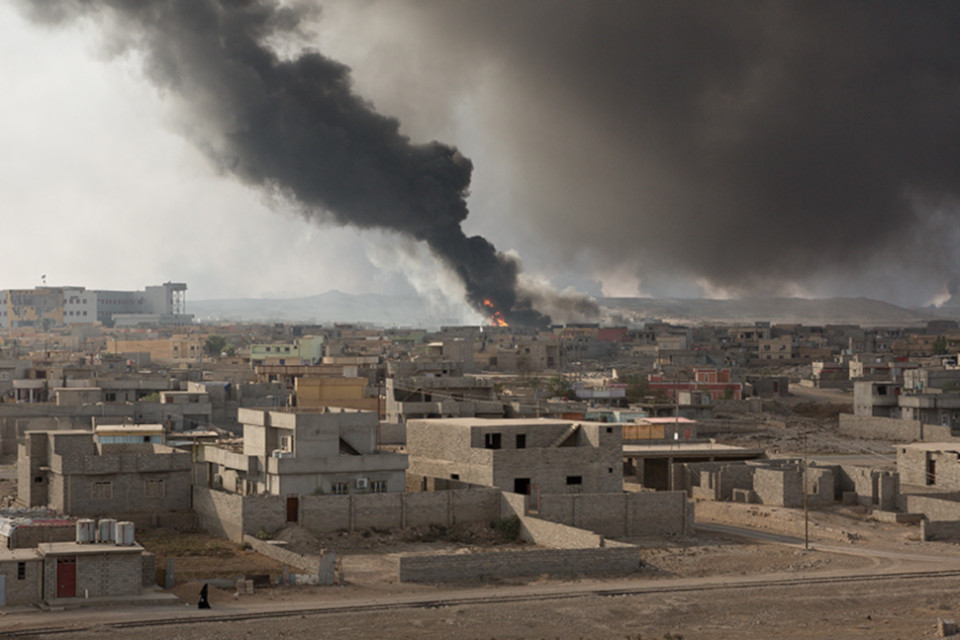
Qayyarah, northern Iraq, toxic plumes from burning oil wells in and around the town threatened human health and the environment. The fires were started by Islamic State as part of a scorched earth policy and burned for months. Credit: © Matt Cetti-Roberts/Frontlinepictures.com
Severe pollution incidents can be caused when industrial, oil or energy facilities are deliberately attacked, inadvertently damaged or disrupted. In some cases, deliberate attacks on oil or industrial facilities are used as a weapon of war, to pollute large areas and spread terror. The war in Ukraine highlighted the risks of warfare in countries with extensive nuclear infrastructure. Other scorched earth techniques include the destruction of agricultural infrastructure like canals, wells and pumps and the burning of crops. Tactics like these threaten food security and livelihoods, increasing the vulnerability of rural communities. Whether unintended or deliberate, these large-scale pollution incidents can lead to transboundary impacts from air pollution or through the contamination of rivers, aquifers or the sea. In some instances, these even have the potential to affect weather or the global climate.
Weapons and military materiel used during conflicts also leave environmental legacies. Land mines, cluster munitions and other explosive remnants of war can restrict access to agricultural land and pollute soils and water sources with metals and toxic energetic materials. In major conflicts, large volumes of military scrap may be produced or abandoned, this can contain a range of polluting materials, contaminating soils and groundwater, whilst exposing those who work on it to acute and chronic health risks. Wrecked or damaged ships, submarines and offshore oil infrastructure can cause marine pollution.
Many conventional weapons have toxic constituents, others such as depleted uranium are also radioactive. Incendiary weapons such as white phosphorous are not only toxic but can also damage habitats through fire. While now restricted, the widespread use of chemical defoliants damaged public and ecological health across large areas of Vietnam.
Easy access to small arms and light weapons can harm wildlife through facilitating increased hunting and poaching, and the ungoverned spaces created by conflict create the ideal conditions for wildlife crime. Weapons used in wildlife crime have been found to have been sourced from countries affected by conflict. Scientists and researchers may be unable to access areas due to security problems, harming conservation programmes. While national parks and protected areas may lose what protection they had as governance is weakened, or protecting them may be made more difficult when poachers are armed. These situations can encourage more militarised conservation, which can have negative effects on relationships with local communities.
Severe pollution incidents can be caused when industrial, oil or energy facilities are deliberately attacked, inadvertently damaged or disrupted. In some cases, deliberate attacks on oil or industrial facilities are used as a weapon of war, to pollute large areas and spread terror. The war in Ukraine highlighted the risks of warfare in countries with extensive nuclear infrastructure. Other scorched earth techniques include the destruction of agricultural infrastructure like canals, wells and pumps and the burning of crops. Tactics like these threaten food security and livelihoods, increasing the vulnerability of rural communities. Whether unintended or deliberate, these large-scale pollution incidents can lead to transboundary impacts from air pollution or through the contamination of rivers, aquifers or the sea. In some instances, these even have the potential to affect weather or the global climate.
Weapons and military materiel used during conflicts also leave environmental legacies. Land mines, cluster munitions and other explosive remnants of war can restrict access to agricultural land and pollute soils and water sources with metals and toxic energetic materials. In major conflicts, large volumes of military scrap may be produced or abandoned, this can contain a range of polluting materials, contaminating soils and groundwater, whilst exposing those who work on it to acute and chronic health risks. Wrecked or damaged ships, submarines and offshore oil infrastructure can cause marine pollution.
Many conventional weapons have toxic constituents, others such as depleted uranium are also radioactive. Incendiary weapons such as white phosphorous are not only toxic but can also damage habitats through fire. While now restricted, the widespread use of chemical defoliants damaged public and ecological health across large areas of Vietnam.
Easy access to small arms and light weapons can harm wildlife through facilitating increased hunting and poaching, and the ungoverned spaces created by conflict create the ideal conditions for wildlife crime. Weapons used in wildlife crime have been found to have been sourced from countries affected by conflict. Scientists and researchers may be unable to access areas due to security problems, harming conservation programmes. While national parks and protected areas may lose what protection they had as governance is weakened, or protecting them may be made more difficult when poachers are armed. These situations can encourage more militarised conservation, which can have negative effects on relationships with local communities.
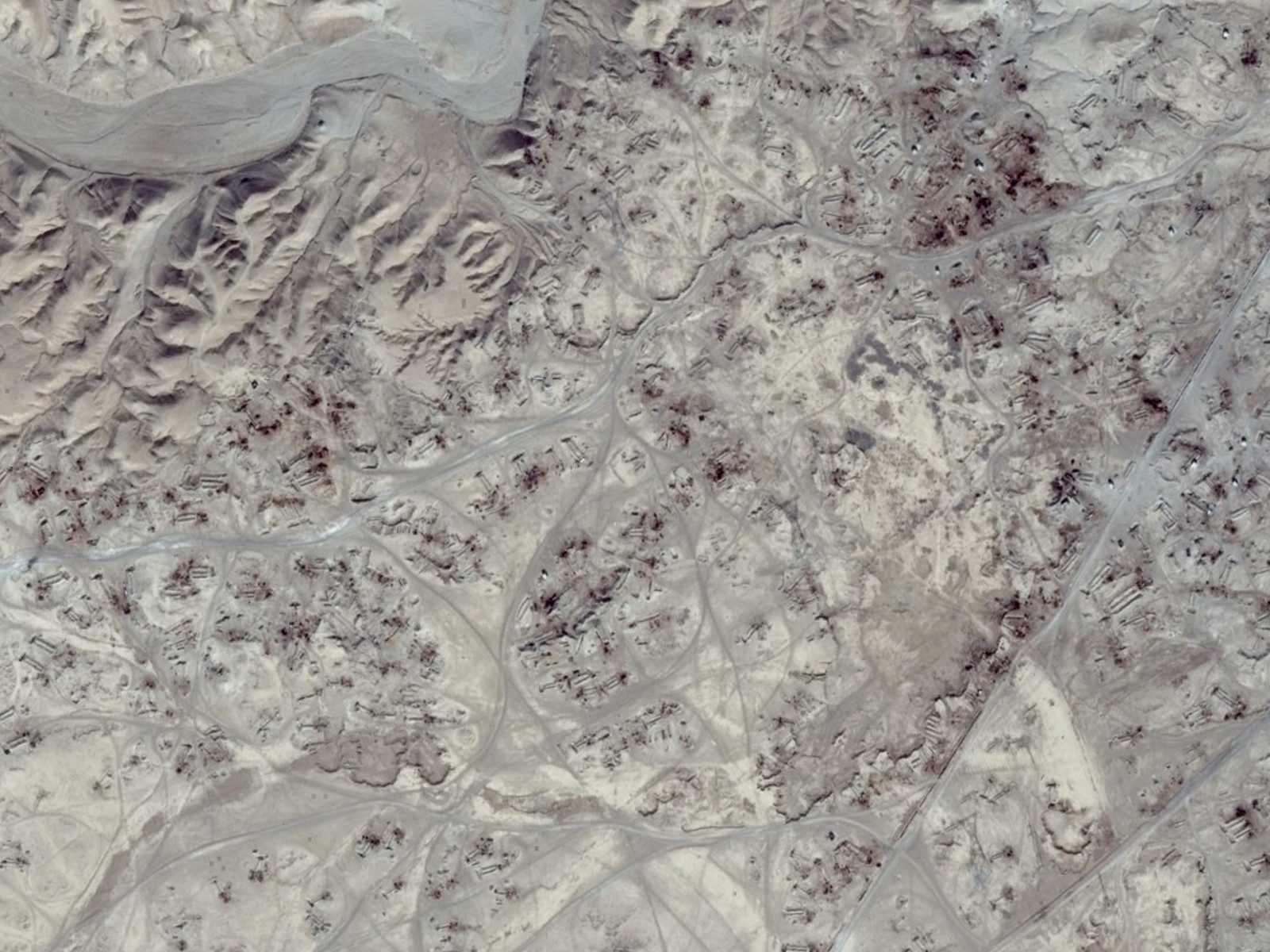
The environmental scars left by the use of artisanal oil refineries near Deir-ez-Zour Syria. The practice expanded rapidly after Russian and Coalition forces destroyed Syria's oil infrastructure and armed groups recognised oil's potential to finance their activities. However the primitive refining process carries it with serious health and environmental risks. Credit: Google.
Deforestation often increases during conflicts. Much of the time this is due to overharvesting by communities who are suddenly reliant on wood and charcoal for fuel and heating. But it can also be as a result of armed or criminal gangs taking advantage of the collapse of management systems. Civilian coping strategies can also lead to the overharvesting of other natural resources or to environmentally damaging practices such as artisanal oil refining. And in some cases, community systems of sustainable resource management may be disrupted or lost, with often long-term consequences.
Environmental damage and degradation can also stem from resource extraction used to finance conflicts. In many conflicts, armed groups vie for control over oil, mineral resources or timber. Processing methods, such as the use of mercury in gold mining, can pollute water bodies. In addition to armed groups and artisanal workers, private companies may also be active in areas affected by conflict, often operating with minimal environmental oversight.
Human displacement is common to many conflicts. Camps for refugees and internally displaced peoples can have large environmental footprints, particularly where they are unplanned or lack essential services, like water, sanitation and waste management. Their location is also important, as camp residents may be compelled to use local resources such as firewood, which can place local resources under pressure. People displaced by conflict may also move internally to urban areas, swelling the population and placing local environmental services under strain. Research has found that displacement camps are frequently located in Key Biodiversity Areas.
In some cases, the areas where displaced people move through may be placed under pressure, for example herders moving their livestock through sensitive ecosystems. Large scale refugee movements can also create transboundary environmental impacts, when areas in neighbouring countries struggle to cope with the influx of people and with meeting their basic needs.
Deforestation often increases during conflicts. Much of the time this is due to overharvesting by communities who are suddenly reliant on wood and charcoal for fuel and heating. But it can also be as a result of armed or criminal gangs taking advantage of the collapse of management systems. Civilian coping strategies can also lead to the overharvesting of other natural resources or to environmentally damaging practices such as artisanal oil refining. And in some cases, community systems of sustainable resource management may be disrupted or lost, with often long-term consequences.
Environmental damage and degradation can also stem from resource extraction used to finance conflicts. In many conflicts, armed groups vie for control over oil, mineral resources or timber. Processing methods, such as the use of mercury in gold mining, can pollute water bodies. In addition to armed groups and artisanal workers, private companies may also be active in areas affected by conflict, often operating with minimal environmental oversight.
Human displacement is common to many conflicts. Camps for refugees and internally displaced peoples can have large environmental footprints, particularly where they are unplanned or lack essential services, like water, sanitation and waste management. Their location is also important, as camp residents may be compelled to use local resources such as firewood, which can place local resources under pressure. People displaced by conflict may also move internally to urban areas, swelling the population and placing local environmental services under strain. Research has found that displacement camps are frequently located in Key Biodiversity Areas.
In some cases, the areas where displaced people move through may be placed under pressure, for example herders moving their livestock through sensitive ecosystems. Large scale refugee movements can also create transboundary environmental impacts, when areas in neighbouring countries struggle to cope with the influx of people and with meeting their basic needs.
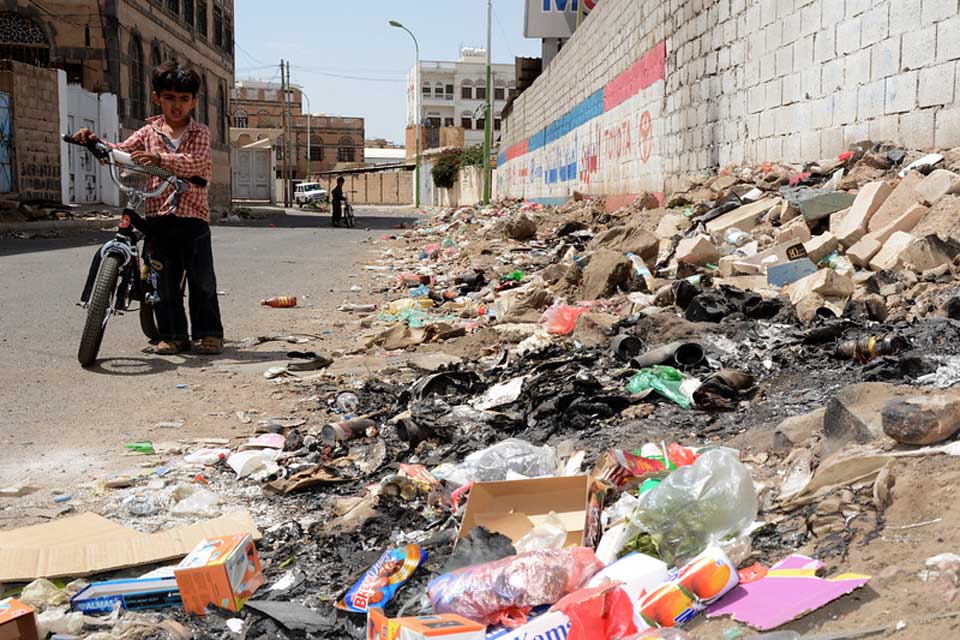
The consequences of the collapse of Yemen’s waste management system as a result of the current conflict are clearly visible on the streets. Credit OCHA/P.Kropf
One basic need common to displacement camps and to urban areas experiencing conflict is waste management. Systems often break down during conflict leading to increased rates of waste dumping and burning, improper management and less waste segregation. Waste management systems are just one element of environmental governance that may collapse during conflicts. Local environmental laws and regulations may be ignored, and local and national administrations may lose their capacity to monitor, assess or respond to environmental problems. New administrations may also emerge in areas that are held by non-state actors, and whose approach to environmental governance may differ markedly from that of the government. In recent years there has been a growing trend towards the weaponisation of environmental information during conflicts, leading to the increased politicisation of environmental risks.
Governments may be unable to meet their international environmental obligations, particularly because projects and programmes supported by the international community may be curtailed. In this way a localised conflict may harm the environment nationally by impacting governance and projects countrywide. The existence of a conflict can also create serious technological risks from industrial infrastructure, and then hamper the international cooperation required to address them.
These diverse impacts on the environment mean that conflicts are often viewed as sustainable development in reverse, and may set countries back years. Not just because of new damage, but in the development that would have taken place were it not for the existence of a conflict. But is it all negative? There are times where the existence of conflict can confer protection to areas, for example by slowing unsustainable development that would otherwise have taken place in areas that are insecure, or by excluding human activities due to the presence of explosive remnants of war. But overall, and particularly because of the disruption conflicts cause to societies and to governance, the harms far outweigh the benefits.
One basic need common to displacement camps and to urban areas experiencing conflict is waste management. Systems often break down during conflict leading to increased rates of waste dumping and burning, improper management and less waste segregation. Waste management systems are just one element of environmental governance that may collapse during conflicts. Local environmental laws and regulations may be ignored, and local and national administrations may lose their capacity to monitor, assess or respond to environmental problems. New administrations may also emerge in areas that are held by non-state actors, and whose approach to environmental governance may differ markedly from that of the government. In recent years there has been a growing trend towards the weaponisation of environmental information during conflicts, leading to the increased politicisation of environmental risks.
Governments may be unable to meet their international environmental obligations, particularly because projects and programmes supported by the international community may be curtailed. In this way a localised conflict may harm the environment nationally by impacting governance and projects countrywide. The existence of a conflict can also create serious technological risks from industrial infrastructure, and then hamper the international cooperation required to address them.
These diverse impacts on the environment mean that conflicts are often viewed as sustainable development in reverse, and may set countries back years. Not just because of new damage, but in the development that would have taken place were it not for the existence of a conflict. But is it all negative? There are times where the existence of conflict can confer protection to areas, for example by slowing unsustainable development that would otherwise have taken place in areas that are insecure, or by excluding human activities due to the presence of explosive remnants of war. But overall, and particularly because of the disruption conflicts cause to societies and to governance, the harms far outweigh the benefits.


Comments
Post a Comment