Environmental damage during occupations.

Occupations may be relatively short-lived, or can last decades. While states have an obligation to protect the occupied population, their environmental obligations are less well defined. As with conflicts, occupations can hold back sustainable development, for example by limiting access to materials or technologies, or by acting as a barrier to investment. Pre-existing environmental programmes and projects may be curtailed, or replaced by a new incoming administration. Particularly problematic in the face of the intensifying climate crisis, occupations can also constrain the ability of communities to adapt to climate change, rendering them more vulnerable.
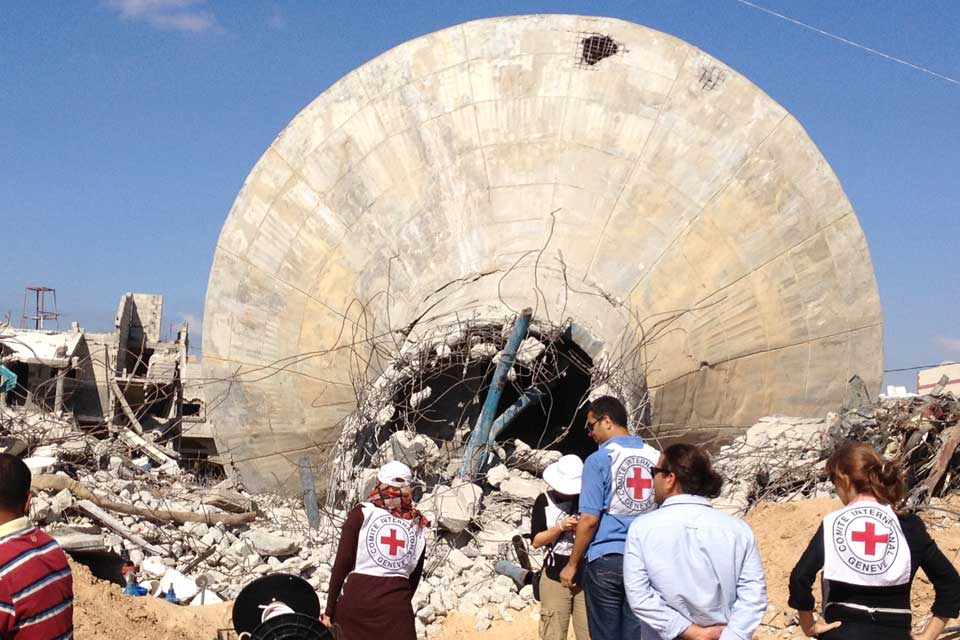
A water tower lies ruined in Gaza 2014. Sporadic periods of violence during conflicts cause damage to environmental infrastructure that often goes unrepaired. Credit: Robin Lloyd/ECHO
A lack of investment and development can lead to the slow collapse of critical environmental infrastructure, infrastructure that may be damaged or degraded by periods of violence. Measures taken by the occupied population to oppose the occupier can also lead to environmental harm. The increased military presence can impact landscapes by vehicle movements or training areas, or by the building of walls and fences that can disrupt wildlife movements, or separate people from the resources they are dependent on. Poor waste management at military bases, whether operated by states or private contractors, can harm public health and the environment. Meanwhile, militarised responses to security issues can create more serious environmental harm than civil responses would.
Inequitable resource management is common to occupations, with resource grabs and over-extraction common, whether of water or minerals. Environmental oversight can be limited or preferential, facilitating environmental degradation. The occupied population may be unable to enjoy the same environmental human rights as those of the occupier, and be forced to live with limited resources, poorer environmental services and higher levels of pollution.
Politically focused development is common as the occupying power seeks to make its mark on a territory. In this way major infrastructure works may be undertaken with little environmental oversight.
A lack of investment and development can lead to the slow collapse of critical environmental infrastructure, infrastructure that may be damaged or degraded by periods of violence. Measures taken by the occupied population to oppose the occupier can also lead to environmental harm. The increased military presence can impact landscapes by vehicle movements or training areas, or by the building of walls and fences that can disrupt wildlife movements, or separate people from the resources they are dependent on. Poor waste management at military bases, whether operated by states or private contractors, can harm public health and the environment. Meanwhile, militarised responses to security issues can create more serious environmental harm than civil responses would.
Inequitable resource management is common to occupations, with resource grabs and over-extraction common, whether of water or minerals. Environmental oversight can be limited or preferential, facilitating environmental degradation. The occupied population may be unable to enjoy the same environmental human rights as those of the occupier, and be forced to live with limited resources, poorer environmental services and higher levels of pollution.
Politically focused development is common as the occupying power seeks to make its mark on a territory. In this way major infrastructure works may be undertaken with little environmental oversight.


Comments
Post a Comment